Preparing for the SSC CHSL examination in six months is possible when your preparation is organised around a clear timetable, regular practice, revision, and mock-test analysis. Instead of studying every subject randomly, candidates should divide the six-month period into different preparation phases and give every subject consistent attention. The SSC CHSL selection process requires candidates to build a strong foundation in Quantitative Aptitude, English Language, General Intelligence, and General Awareness, along with preparation for computer knowledge and typing-related requirements. Students preparing in Ajmer can follow the same structured approach while adjusting daily study hours according to college, work, coaching, or other responsibilities. The first three months should focus mainly on understanding concepts and completing the syllabus, the fourth month should introduce intensive sectional practice, and the final two months should concentrate on full-length mock tests, revision, and correcting weak areas. A well-planned SSC CHSL 6-month study plan is not about studying for extremely long hours every day; it is about using available time consistently and making measurable progress.
How to Divide 6 Months for SSC CHSL Preparation
The six-month preparation period should be divided into three major stages so that your study gradually moves from concept building to examination-level practice. Months 1–3 should be the foundation phase, where you complete the important topics of Maths, English, Reasoning, and General Awareness while beginning basic computer and typing preparation. Do not rush through chapters simply to mark them as completed; understand the concept first and then solve approximately 40–50 questions to check whether you can apply what you have learned. For Maths, build your calculation ability and revise important formulas, squares, cubes, percentages, fractions, and multiplication tables. English preparation should include grammar, vocabulary, sentence improvement, comprehension, synonyms, antonyms, idioms, and previous-year questions. Reasoning should be practised topic by topic, while General Awareness should be studied consistently instead of being postponed until the final month. Month 4 should be dedicated to sectional practice and identifying weak areas. At this stage, candidates should begin taking subject-wise tests under a fixed time limit. A sectional test can show whether the problem is lack of knowledge, slow calculation, poor question selection, careless mistakes, or insufficient revision. Maintain a simple record of your attempts, correct answers, incorrect answers, and time taken. If a particular Maths topic repeatedly produces mistakes, return to the concept and practise it again instead of simply taking more tests. Similarly, if English errors are related to grammar rules or vocabulary, add those areas to your revision list. Candidates preparing for SSC CHSL in Ajmer can use this month to build a personalised weak-topic list and revise those topics every week. Months 5–6 should become the mock-test and revision phase. Start attempting regular full-length SSC CHSL mock tests and gradually increase the frequency as your examination approaches. A target of 50–70 full-length mocks can be used as an intensive benchmark, but completing a large number of tests without analysing them is not particularly useful. After every test, examine every wrong answer and identify the reason for the mistake. Maintain an error notebook containing incorrect formulas, grammar rules, vocabulary, General Awareness facts, reasoning approaches, and calculation mistakes that you tend to repeat. Revise this notebook regularly during the final weeks. Continue current-affairs revision alongside static GK, and do not completely stop concept revision simply because you have started taking mocks. The purpose of the final two months is to improve accuracy, speed, time management, and confidence while reducing repeated mistakes.

Daily SSC CHSL Study Plan for 5–6 Hours
A five-to-six-hour daily routine can provide a practical structure for SSC CHSL preparation when the available study time is used consistently. Around 1.5–2 hours can be reserved for Quantitative Aptitude, including concept learning, calculation practice, and 40–50 questions from the selected topic. Another 1.5 hours can be dedicated to English through grammar, vocabulary, reading comprehension, and previous-year questions. Reasoning can receive approximately 45–60 minutes for topic-wise practice and timed exercises. General Awareness should receive another 45–60 minutes, covering static GK, General Science, important facts, and current affairs. The remaining 30 minutes can be used for computer awareness and typing practice, particularly because these skills should not be left entirely for the final stage. If you have fewer than five hours available on a particular day, divide the subjects across the week instead of skipping them completely. Consistency matters more than following the exact number of hours every day. For SSC CHSL Maths, focus first on concepts and then develop speed through repeated calculations. Learn important formulas and practise questions from individual chapters before moving to mixed practice. Try to improve your mental calculations gradually because spending too much time on basic calculations can affect the overall examination attempt. For English, create a small vocabulary notebook and revise difficult words regularly rather than trying to memorise a large list in one sitting. Read English content every day to improve comprehension and become comfortable with different sentence structures. Reasoning improves through repeated exposure to question patterns, so practise regularly and note down methods that take too much time. General Awareness requires repeated revision because simply reading information once does not guarantee long-term recall. Short notes and frequent revision can make the subject more manageable. Computer and typing practice should also begin early. Spend approximately 30 minutes a day learning basic computer concepts and improving typing accuracy. Candidates often postpone these areas because they are concentrating on the major subjects, but regular short practice over several months is easier than trying to develop these skills immediately before the examination. The daily routine should also include a short revision period whenever possible. Reviewing yesterday’s formulas, vocabulary, mistakes, or General Awareness notes for 15–20 minutes can strengthen retention without requiring a separate long study session.
SSC CHSL Mock Tests, Revision and Previous-Year Questions
Mock tests should become an important part of preparation once your basic concepts are sufficiently strong. They help candidates understand how effectively they can use their knowledge under time pressure. However, the most important part of a mock test is the analysis that follows it. After completing an SSC CHSL mock test, check every incorrect question and also review questions that took too long to solve. Divide mistakes into categories such as conceptual mistakes, calculation errors, careless mistakes, incorrect interpretation, vocabulary problems, and time-management issues. This makes it easier to identify the real reason behind a low score. If the same mistake appears repeatedly, it should become a priority topic for revision. Previous-year questions should be included throughout the six-month preparation rather than being reserved only for the final weeks. They help candidates become familiar with the style and level of questions and show how concepts are applied in actual examination papers. Solve them after completing individual topics and later practise mixed sets under timed conditions. While solving, do not focus only on how many questions you answered correctly. Ask yourself whether you reached the answer efficiently and whether another approach could have saved time. Revision should run parallel to practice. Create short revision material for Maths formulas, English grammar, vocabulary, Reasoning methods, General Awareness, and computer concepts. Your error notebook should receive special attention during the final month because it represents your personal problem areas. Instead of reading every book or source again, use your notes, previous-year questions, mock-test mistakes, and important revision material to keep preparation focused. During the last 30 days, avoid constantly changing your study resources. Continue full-length tests according to your capacity, analyse them properly, and revise weak areas between tests. Current affairs should also be revised regularly. If your mock-test performance improves gradually, continue strengthening accuracy rather than becoming overconfident. If scores remain low in a particular section, use the remaining time to identify the exact reason and practise accordingly. The final month should be about refining preparation rather than trying to learn everything from the beginning.
SSC CHSL Preparation Tips for Students in Ajmer
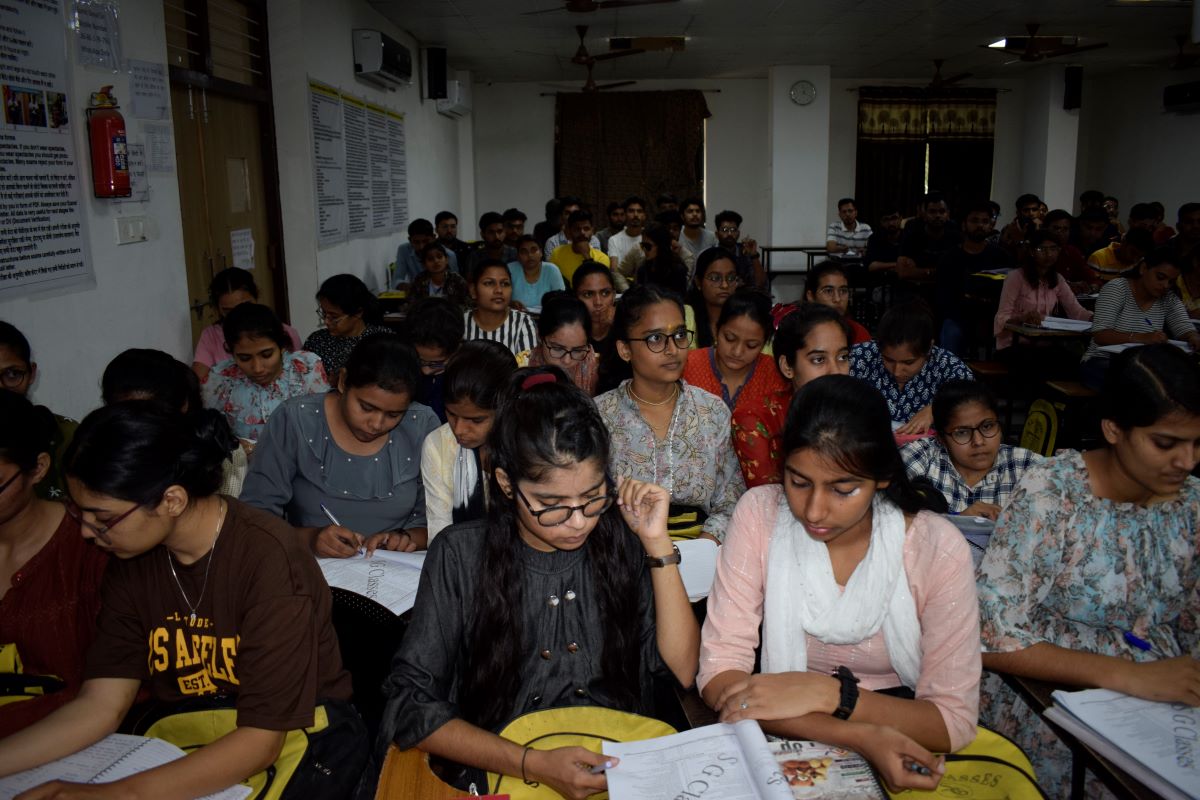
Students preparing for SSC CHSL in Ajmer can build an effective routine by combining structured study, regular practice, and suitable guidance. Whether you study at home, in a library, or through coaching, choose a fixed study environment where distractions are limited. If you attend classes at SG Classes, use classroom time for understanding concepts and clearing doubts, while independent study hours can be used for question practice, revision, and mock-test analysis. Keep your study material organised and avoid repeatedly switching between different books, notes, and online resources. A focused set of reliable resources is generally easier to revise than a large collection that remains incomplete. Your six-month journey should also include weekly progress checks. At the end of every week, check how many chapters were completed, how many questions were solved, which topics caused problems, and whether your mock or sectional-test accuracy improved. This simple review can help you adjust the following week’s timetable. Students should also maintain a healthy balance between study and rest because tiredness can reduce concentration and increase careless mistakes. Instead of comparing your preparation hours with other candidates, focus on your own consistency and measurable improvement. The most important part of this SSC CHSL study plan is following it regularly. You do not need to make every day perfect. Some days may have fewer study hours, while others may allow more practice. What matters is returning to the routine and avoiding long gaps in preparation. Complete the syllabus systematically, practise questions regularly, revise what you have already studied, and use mock tests to understand your weaknesses. With six months of disciplined preparation, students can create a much more organised approach to the SSC CHSL examination and enter the final stage with better familiarity with the syllabus, question patterns, time management, and revision requirements.
FAQs
Have questions? We’ve answered some of the most common queries to help you understand the topic better
Q1. Can I prepare for SSC CHSL in six months?
Yes, a structured six-month plan can provide enough time for syllabus completion, practice, revision, and mock tests.
Q2. How many hours should I study for SSC CHSL daily?
A focused 5–6 hours daily can be a practical target, depending on your current level and other responsibilities.
Q3. When should I start SSC CHSL mock tests?
Begin sectional tests after building basic concepts and focus heavily on full-length mocks during the final two months.
Q4. Should I prepare for Tier 2 from the beginning?
Yes. Basic computer and typing practice can be included for around 30 minutes daily from the early stages.
Q5. Where can students prepare for SSC CHSL in Ajmer?
Students can consider structured SSC CHSL guidance and classroom preparation at SG Classes, along with regular self-study and mock-test practice.
Post a comment Cancel reply
Related Posts
SSC CHSL Coaching in Ajmer
Preparing for the Staff Selection Commission Combined Higher Secondary Level (SSC CHSL) examination requires a…
SSC MTS Exam 2026 Complete Guide to Notification, Eligibility, Exam Pattern, Syllabus and Preparation Strategy
The SSC MTS Exam 2026 is one of the most popular government examinations in India…
SSC CPO Exam 2026: Complete Guide
The SSC CPO Exam 2026 is one of the most popular government recruitment exams in…
SSC Stenographer Exam 2026: Complete Guide for Aspirants
The SSC Stenographer 2026-27 recruitment (Grade C & D) is a highly anticipated examination for…